
TL;DR: Cannabinoid blends are products that combine two or more cannabinoids into a single formula to produce effects that a single cannabinoid on its own cannot fully deliver. Delta 8, delta 9, THCP, HHC, CBN, CBD, and other hemp-derived cannabinoids each have their own effect profile, and blending them allows producers to shape experiences around specific goals like relaxation, focus, sleep, or a balanced high. This article explains what cannabinoid blends are, how they work, what each major cannabinoid contributes to a blend, and what to look for when buying blended products.
Key Takeaways:
- Cannabinoid blends combine multiple hemp-derived cannabinoids to create layered, more nuanced effects than a single cannabinoid can produce alone.
- Each cannabinoid in a blend contributes something distinct, whether that is potency, duration, body feel, mental clarity, or calming effect.
- The entourage effect is the principle behind why blends often feel more complete than single-cannabinoid products.
- Lab testing and accurate potency disclosure are even more critical for blended products because multiple cannabinoids need to be independently verified.
- Understanding what each cannabinoid does helps consumers choose blends that match their specific goals.
What Cannabinoid Blends Actually Are
The term cannabinoid blends gets used broadly in the hemp industry, and it can mean different things depending on the product.
At its core, a cannabinoid blend is any hemp-derived product that contains more than one cannabinoid in meaningful concentrations, combined intentionally to shape a specific effect.
That is different from a product that simply contains trace amounts of multiple cannabinoids as a byproduct of the extraction process.
If you’ve been on the fence, now’s the time. We’re currently running a sale on delta 8 wax and select products, use code D8SLY25 for 15% off your order today.
The Difference Between Full-Spectrum, Broad-Spectrum, and Intentional Blends
Full-spectrum hemp extracts contain the full range of cannabinoids, terpenes, and other plant compounds naturally present in hemp, including trace amounts of delta 9 THC. Broad-spectrum extracts go through additional processing to remove THC while retaining other cannabinoids and terpenes. Both of these are technically cannabinoid blends, but they are defined by what they preserve from the plant rather than by deliberate combination.
Intentional cannabinoid blends are different. These are products where specific cannabinoids are selected, measured, and combined at precise ratios to hit a particular effect target. A sleep blend might combine delta 8 with CBN and CBD. A potency-focused blend might combine delta 8 with THCP or delta 9.
A daytime blend might pair CBD with a small amount of delta 8 to provide mild relaxation without sedation. The distinction matters because intentional blends are the product of formulation decisions, not just extraction choices, and understanding that helps explain why they perform the way they do.
Major Cannabinoids and What They Bring to a Blend
Understanding what each cannabinoid contributes to a blend is the most practical way to evaluate any blended product. Each one has a distinct profile, and knowing what role each is playing in a formula makes it possible to match a blend to a specific goal.
Delta 8 THC: The Baseline Cannabinoid
Delta 8 is probably the most common foundational cannabinoid in modern hemp blends. It produces a mild, clear-headed high with noticeable relaxation and mild euphoria, and it is well-tolerated by a wide range of users. In a blend, delta 8 often serves as the primary cannabinoid that establishes the baseline experience, with other cannabinoids layered on top to add specific qualities.
Because delta 8 binds to CB1 receptors with moderate affinity, it creates a platform that other cannabinoids can work alongside or against. A small amount of THCP added to a delta 8 base, for example, increases the potency and depth of the experience without the dosing unpredictability of a pure THCP product.
A small amount of CBD added to a delta 8 base can soften the edges of the high and add a calming quality that some users find makes the experience more comfortable. Delta 8’s versatility as a base cannabinoid is a big part of why it shows up in so many blended products.
THCP: The Potency Driver
THCP is the cannabinoid that adds intensity to a blend. Because of its extended alkyl side chain and dramatically higher CB1 receptor binding affinity compared to delta 8 or even delta 9, even small amounts of THCP in a blend can shift the potency significantly.
Products that combine delta 8 with THCP are among the most popular blends in the current market because they deliver a stronger, more complete experience without the dosing difficulty of a pure THCP product.
In a well-formulated blend, THCP is typically present in much smaller concentrations than the primary cannabinoid. A blend might be 90% delta 8 distillate with 2 to 5% THCP, which is enough to elevate the experience noticeably without pushing it into territory that is uncomfortable for most users.
For anyone who has been using delta 8 for a while and found it is no longer delivering the experience they are after, a delta 8 and THCP blend is often the most natural next step. Finding those products through a retailer that stocks the best delta 8 carts and blended cannabinoid formats means the quality standard carries across both product types.
CBD: The Balancer
CBD is a non-intoxicating cannabinoid that brings calming, balancing properties to any blend it is part of. In a blend with psychoactive cannabinoids like delta 8 or delta 9, CBD tends to soften the intensity of the high and reduce the likelihood of anxiety or discomfort at higher doses. This moderating effect makes CBD a useful component in blends designed for users who want a relaxed, comfortable experience rather than a strong or stimulating one.
CBD also interacts with the endocannabinoid system through different receptor pathways than THC-type cannabinoids, which means its contribution to a blend is not simply dilution of the psychoactive effect. It actively shapes the experience in ways that can improve tolerance, reduce the sharpness of onset, and extend the overall duration with a smoother taper.
For people who are newer to cannabinoid blends or who are sensitive to psychoactive effects, a CBD-dominant blend with a moderate amount of delta 8 is often the most approachable starting point.
CBN: The Sleep Cannabinoid
CBN, or cannabinol, is a mildly psychoactive cannabinoid that is best known for its sedative properties. It is produced naturally through the degradation of THC over time, and it is found in aged cannabis in higher concentrations.
In hemp products, CBN is typically added intentionally in extracted or synthesized form. Its most common use in cannabinoid blends is in sleep-focused formulations, where it is paired with delta 8, CBD, or both to create a formula specifically oriented toward relaxation and sleep onset.
The combination of delta 8 and CBN is one of the more well-established pairings in the hemp space. Delta 8 provides the broader relaxation and mild euphoria, and CBN adds the sedative depth that helps users wind down completely. Users who have tried this combination consistently report deeper, more restful sleep compared to either cannabinoid used alone, which is a practical demonstration of the entourage effect working in a real product context.
HHC: The Middle Ground Option
HHC, or hexahydrocannabinol, is a hydrogenated form of THC that produces effects described as sitting between delta 8 and delta 9 in intensity.
It is more stable than THC variants because the hydrogenation process makes it more resistant to oxidation and heat, which gives HHC products a longer shelf life. In blends, HHC often appears as an alternative to or alongside delta 8 to add a slightly different dimension to the effect profile without going all the way to THCP-level potency.
Blends that combine delta 8 and HHC tend to produce a well-rounded experience that is more textured than either alone. HHC adds a slight increase in intensity and a different quality of euphoria that many users describe as more physical than delta 8’s more cerebral feel.
For consumers who are exploring cannabinoid blends explained through the lens of effect variety rather than just potency, delta 8 and HHC blends offer a good introduction to how different cannabinoids can complement each other without dramatically escalating the experience.
Common Types of Cannabinoid Blend Products
Blended cannabinoid products come in a variety of formats, and the format itself affects how the blend performs. Understanding what is available makes it easier to match a product type to the intended use.
Blended Vape Carts and Disposables
Blended vape cartridges and disposables are among the most popular formats for cannabinoid blends because inhalation delivers effects quickly, making it easy to gauge the experience in real time. A blended cart typically lists each cannabinoid it contains and the percentage or milligram amount of each on the product label or COA. The most common blends in vape format are delta 8 with THCP, delta 8 with HHC, and delta 8 with delta 9.
For anyone interested in blended vape products, the same quality standards that apply to single-cannabinoid carts apply here, only with more variables to verify. The COA needs to confirm the presence and concentration of every cannabinoid listed, not just one.
Hardware quality, oil purity, and the absence of cutting agents are just as important in a blended cart as in any other vape product. Shopping from sources that carry premium delta 8 carts and blended formats with consistent documentation is the most reliable way to get a product that performs the way it claims to.
Blended Gummies and Edibles
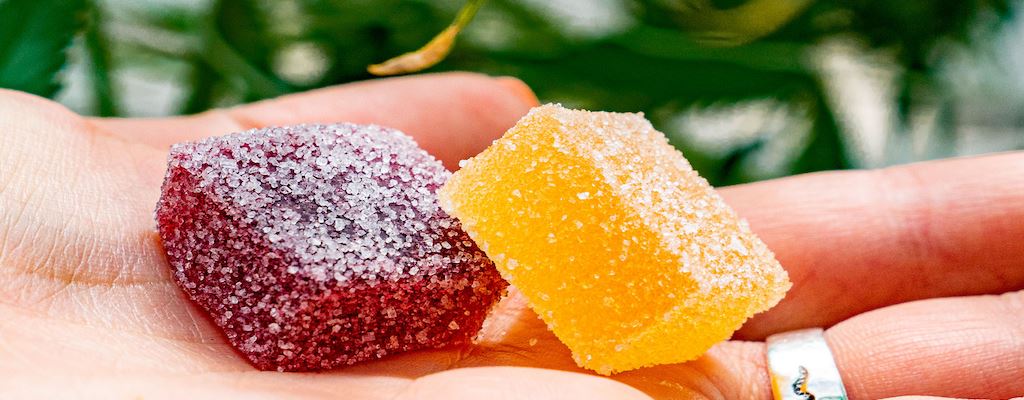
Blended cannabinoid gummies and edibles are the other major format in this space, and they are particularly well-suited to sleep-focused or relaxation-oriented blends because of how long edibles last in the system. A sleep gummy that combines delta 8 with CBN and CBD, for example, is designed to be taken before bed and to carry its effects through several hours of sleep, something that a vape product cannot realistically accomplish on its own.
Dosing accuracy matters more with edibles than with any other format because the effects take longer to arrive, which makes it tempting to take more before the first dose has fully kicked in.
A blended edible with clearly stated per-serving amounts for each cannabinoid gives the user the information they need to dose responsibly. Products that list only a combined total without breaking down individual cannabinoid contributions are harder to evaluate and harder to dose safely.
Blended Tinctures
Blended tinctures offer a middle ground between vapes and edibles in terms of onset time. Taken sublingually, tinctures can begin producing effects within 15 to 45 minutes for most users, which is faster than swallowed edibles but slower than inhalation.
Tinctures are also easy to dose incrementally, since the dropper allows for precise measurement. A blended tincture with delta 8, CBD, and CBN is a common format for people who want the flexibility of adjustable dosing in a sleep or relaxation formula.
The cannabinoid content in a blended tincture should be fully disclosed per serving, with a COA that confirms both the ratios and the absence of contaminants.
Carrier oil quality is also worth noting, since most tinctures use MCT oil, hemp seed oil, or similar food-grade oils as the base, and the quality of the carrier affects both flavor and absorption.
Final Thoughts
Cannabinoid blends represent one of the most interesting developments in the hemp product space because they move beyond single-compound products into formulations that are designed with specific outcomes in mind. When made well, with accurate ratios, clean ingredients, and full lab documentation, blended products consistently outperform single-cannabinoid formats for users who know what they are looking for.
The principles behind cannabinoid blends explained across this article come down to a few core ideas: each cannabinoid has a role to play, the combination can do things the individual parts cannot, and the quality of the blend depends entirely on the quality of the production behind it. Finding products that meet that standard, with transparent labels, current COAs, and honest potency disclosures, is what turns a general interest in cannabinoid blends into a consistently good purchasing habit.
FAQs
What is a cannabinoid blend?
A cannabinoid blend is a hemp-derived product that combines two or more cannabinoids in specific concentrations to produce a layered or more targeted effect than a single cannabinoid can deliver on its own.
Do cannabinoid blends get you higher than single-cannabinoid products?
It depends on the blend. A blend that includes THCP or delta 9 alongside delta 8 will produce a stronger effect than delta 8 alone because those cannabinoids add potency.
Is the entourage effect real?
The entourage effect is supported by scientific research and is a credible explanation for why combined cannabinoid products often perform differently from isolated ones.
How do I know what cannabinoids are in a blended product?
The product label should list every cannabinoid present by name and amount per serving. The Certificate of Analysis from the third-party lab should confirm those amounts independently.
Are cannabinoid blends safe?
Cannabinoid blends made from compliant hemp, produced under clean manufacturing practices, and verified by third-party lab testing are considered safe for adult use. The safety of any blended product depends on the quality of its ingredients, the accuracy of its labeling, and responsible consumption practices.